
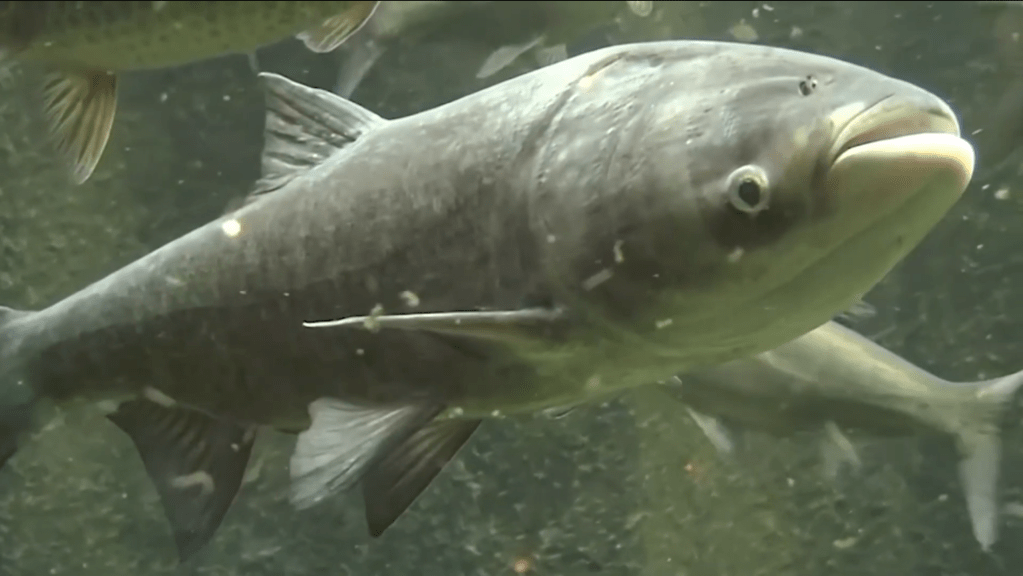
Invasive carp are a group of fish species including Bighead, Black, Grass, and Silver Carps that have been introduced to North America from Asia and Europe and pose a serious threat to native aquatic ecosystems. These fish are fast-growing, prolific feeders that out-compete native fish for food and habitat. They also have negative impacts on water quality, recreational opportunities, and commercial fishing.
Invasive carp are spreading throughout the Mississippi River basin and other large rivers and are threatening to invade the Great Lakes. To prevent and control the spread of invasive carp, it is important to learn more about their biology, ecology, behavior, and impacts. The following educational resources from the U.S. Geological Survey (USGS) and the U.S. Fish and Wildlife Service (USFWS) provide useful information on invasive carp for students, teachers, researchers, policy makers, and the general public.
United States Geological Survey (USGS)
Science and innovation for battling invasive carp (usgs.gov)
Are invasive carp dangerous? | U.S. Geological Survey (usgs.gov)
What are Invasive Carp? | U.S. Geological Survey (usgs.gov)
What is an invasive species and why are they a problem? | U.S. Geological Survey (usgs.gov)
United States Fish and Wildlife Service (USFWS)
Invasive carp in Southeastern waters | U.S. Fish & Wildlife Service (fws.gov)
Silver Carp (Hypophthalmichthys molitrix) | U.S. Fish & Wildlife Service (fws.gov)
Asian Carp in the Great Lakes and Mississippi River Systems | U.S. Fish & Wildlife Service (fws.gov)
2022 invasive carp forum slides | FWS.gov
High Tech Battle Waged Against Invasive Carp | U.S. Fish & Wildlife Service (fws.gov)
 Citizen Carp Control™
Leave a comment